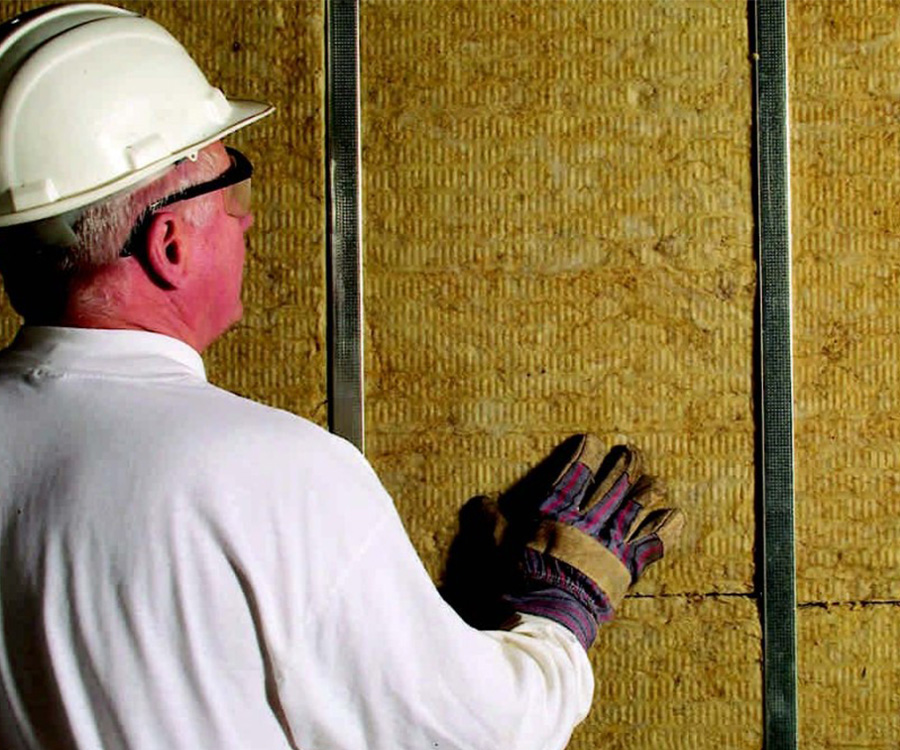
Thermal Insulation Mineral wool Resistance
Thermal resistance of stonewool:
The discussion about thermal resistance is very different for insulators compared to the discussion about heat transfer coefficient.
The heat transfer coefficient varies depending on the thickness and density of different types of rock wool.
The thermal resistance is related to the material of the insulator; for example:
The thermal resistance of polystyrene foams is 120 degrees Celsius, which means that when the temperature reaches 120 degrees Celsius, this insulator starts to melt and degrade.
Thermal resistance of rock wool:
The thermal resistance for all types of rock wool insulation, regardless of density, thickness, or type, is the same because the thermal resistance of rock wool is related to the rock wool fibers, also called raw wool or basalt fibers, which are the raw material for all rock wool products.
Based on research and experiments, the thermal resistance of rock wool is 1200 degrees Celsius, meaning that when the continuous temperature reaches 1200 degrees Celsius, the rock wool insulation starts to change its shape and melt.
For example, the time it takes for a 5-centimeter thick insulation with a density of 50 kilograms per cubic meter to melt at 1200 degrees Celsius is the same as the time for a 10-centimeter thick insulation with a density of 100 kilograms per cubic meter. However, what differs in the discussion of the thermal resistance of rock wool is the time of degradation or melting of the insulation.
For example, if a 5-centimeter thick rock wool insulation melts at 1200 degrees Celsius in 20 minutes, the time for the 10-centimeter insulation to degrade at 1200 degrees Celsius is 40 minutes.